
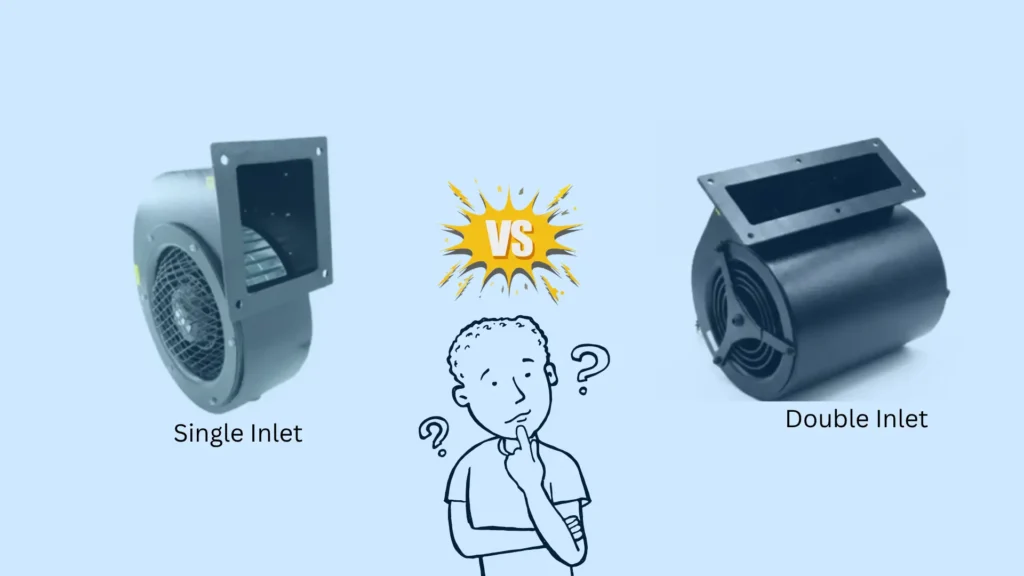
Single vs Double Inlet Blowers: Airflow Comparison
Introduction
Single inlet and double inlet centrifugal blowers differ in how air enters the impeller, affecting airflow capacity, installation space, and suitability for different industrial applications. The right blower depends on your required airflow, available space, and operating conditions. Choosing the correct type helps maintain efficient performance, reduce noise, and avoid unnecessary energy consumption. Both types are manufactured at our facility in Karnataka and supplied across India.
Table of Contents
- What Is a Single Inlet Centrifugal Blower?
- What Is a Double Inlet Centrifugal Blower?
- Single Inlet vs Double Inlet: Key Differences
- When to Choose a Double Inlet Centrifugal Blower
- When to Choose a Single Inlet Centrifugal Blower
- How to Choose Between the Two
- Frequently Asked Questions
- Get the Right Centrifugal Blower From Eyyani
What Is a Single Inlet Centrifugal Blower?
A single inlet centrifugal blower pulls air in from one side of its impeller and pushes it out through the casing. It’s a simple, compact design, which is why it fits easily into tight spaces.
Our single inlet range is the ESB series: 17 models from 120 mm x 30 mm to 280 mm x 155 mm, delivering 140 to 2,750 m³/hr. People use them for fume exhaust, cooling, drying and small to medium ventilation jobs.
What Is a Double Inlet Centrifugal Blower?
A double inlet centrifugal blower has two air inlets, one on each side of the impeller, so it pulls air in from both sides at once. That’s why it moves much more air than a single inlet blower of a similar size.
We make 11 double inlet models. They’re built for large HVAC systems, paint booths and heavy-duty ventilation, where the airflow has to be high and steady.
Single Inlet vs Double Inlet: Key Differences
The main difference is how the air gets in, and that decides how much air the blower can move. Think of drinking through one straw or two. One straw is fine for a normal drink, but two straws pull in more at once.
In practice, that comes down to four things:
- Airflow: a double inlet blower moves more air. A single inlet blower handles moderate airflow well.
- Space: a single inlet blower is smaller and easier to fit. A double inlet blower is bigger and needs room on both sides.
- Smoothness: air enters a double inlet blower evenly from both sides, so it runs balanced, with less vibration and noise.
- Best use: double inlet suits large systems like HVAC and paint booths. Single inlet suits fume exhaust, cooling and drying.
On our side, that’s 17 single inlet models and 11 double inlet models to choose from.
When to Choose a Double Inlet Centrifugal Blower
Choose a double inlet blower when airflow is your top priority and you have room for a larger unit. It works best in:
- Large HVAC systems, where it moves big volumes of air steadily.
- Paint booths, where steady airflow helps clear fumes and protects the finish.
- Heavy-duty ventilation, where it runs for long hours in factories and workshops and uses energy sensibly for the air it moves.
When to Choose a Single Inlet Centrifugal Blower
Choose a single inlet blower when space is limited or your airflow need is moderate. It works best in:
- Compact installations, where a bigger double inlet unit simply won’t fit.
- Fume exhaust and cooling, where it does the job reliably.
- Moderate airflow needs, so you don’t pay for capacity you’ll never use.
How to Choose Between the Two
Start with how much air you need, then check your space and your environment. Here’s the order we follow when a customer asks us:
- Work out your airflow. How much air does your process need to move? Your room size and how often the air must change usually gives you the answer.
- Check the resistance. Ducts, bends, filters and hoods all push back against the air. The blower has to overcome that, so tell us about them.
- Measure your space. Make sure there’s room for the blower, and for a double inlet, clear space on both sides.
- Look at the environment. Corrosive fumes need a polypropylene or coated blower. Flammable atmospheres need a flameproof (FLP) blower.
- Leave a little extra. Pick a blower with about 10 to 20% more capacity than you calculated, so it keeps performing as filters clog over time.
Not sure about your numbers? Send us your airflow and pressure requirement and our team will recommend the right model.
Frequently Asked Questions?
Neither wins every time. Double inlet is better when you need high airflow, and single inlet is better when space is tight and the airflow need is moderate.
Usually it needs a bigger motor, because it moves more air. But for the amount of air it delivers, a well-chosen double inlet blower uses energy efficiently.
Yes, double inlet centrifugal blowers can operate with lower noise and vibration because they draw air from both sides of the impeller. However, noise levels depend on blower design, operating speed, sizing, and installation.
Yes. Tell us your airflow, pressure and application, and we’ll recommend a standard model or build a custom blower for you.
Choose the Right Centrifugal Blower for Your Application
Eyyani Electric Machines makes single inlet and double inlet centrifugal blowers in Karnataka, supplies them across India, tests every unit before dispatch and covers it with a 1-year manufacturing warranty.
Request a quote or send us your airflow and pressure requirement, and we’ll help you pick the right blower.


